
Do Eight Cycles Reveal More Than Coincidence?

“Patterns are powerful—but they can also be deceptive. The human mind is naturally inclined to connect events, identify rhythms, and search for meaning. A responsible investigation must therefore ask not only what appears to repeat, but also whether those repetitions withstand careful scrutiny.”
From History to Interpretation
The preceding chapters examined two parallel historical narratives.
The first explored the evolution of the global financial system across eight Rahu transits through Dhanishta between 1877 and 2027. The second reviewed the four completed transits since India’s Independence and their association with significant political developments.
Viewed independently, each historical episode has its own explanation. Wars, policy decisions, technological change, demographic shifts, electoral outcomes, institutional reform, and human judgement all played decisive roles.
The purpose of this investigation has never been to replace those explanations with astrology.
Instead, the question has been far narrower:
Do these periods exhibit recurring characteristics that merit closer attention?
The answer, based on the historical record presented in this study, is that several themes do appear repeatedly.
Whether these represent meaningful cycles or historical coincidence remains a matter for thoughtful debate.
Pattern One
Periods of Structural Change Rather Than Isolated Events
One of the most striking observations is that Rahu’s transit through Dhanishta rarely aligns with a single dramatic event.
Instead, it often coincides with periods of transition.
Consider the historical record.
- The Long Depression was not one market crash but a prolonged restructuring of industrial economies.
- The First World War transformed international finance over several years.
- The Great Depression fundamentally reshaped banking regulation and the role of governments.
- The Bretton Woods system did not collapse overnight; it weakened gradually before giving way to a new monetary order.
- The Global Financial Crisis unfolded over months before reaching its most visible moments.
Similarly, India’s political history shows gradual transformation rather than sudden collapse.
The first General Election institutionalised democracy.
The Congress split reshaped party politics.
The coalition era transformed parliamentary governance.
The Civil Nuclear Agreement altered India’s strategic trajectory while testing coalition stability.
The recurring theme is therefore transition, not catastrophe.

Pattern Two
Institutions Come Under Pressure
Another consistent feature is the prominence of institutions.
Financial institutions.
Political institutions.
Constitutional institutions.
Administrative institutions.
During almost every completed cycle, established systems faced significant tests.
Banks required rescue or reform.
Monetary frameworks were reconsidered.
Governments adapted to changing political realities.
Parliamentary processes were tested.
Leadership structures evolved.
This observation aligns interestingly with Dhanishta’s traditional symbolism.
In Vedic astrology, Dhanishta occupies the domains of Capricorn and Aquarius—both ruled by Saturn.
Saturn represents structure, governance, responsibility, institutions, and systems built over time.
Whether one accepts astrological symbolism or not, the historical record presented in this study repeatedly highlights periods during which institutions became central to national and global developments.
Pattern Three
Corrections Follow Periods of Expansion
Several financial episodes examined earlier shared a common economic characteristic.
They were preceded by extended periods of optimism.
Railway speculation.
Rapid industrial expansion.
Easy credit.
Housing booms.
Property bubbles.
Excessive leverage.
When corrections eventually occurred, they often revealed structural weaknesses that had accumulated over many years.
This observation resonates with Rahu’s traditional symbolism.
In classical astrology, Rahu is associated with expansion, ambition, innovation, speculation, and the tendency to push beyond established limits.
Whether interpreted symbolically or historically, the sequence appears familiar:
Expansion.
Excess.
Correction.
Rebuilding.
Pattern Four
Political Realignment Rather Than Political Collapse
India’s experience presents an important distinction.
Unlike several financial episodes, India’s completed Rahu-in-Dhanishta cycles did not coincide with constitutional breakdown.
Instead, they reflected periods of political adaptation.
The institutions of the Republic proved resilient.
Governments changed.
Leadership evolved.
Political alliances shifted.
Public expectations changed.
Yet democratic continuity remained intact.
This distinction is significant because it suggests that transformation need not imply instability.
Sometimes the most profound changes occur within institutions that continue to function.
Pattern Five
Every Cycle Produced a Different Outcome
One of the strongest arguments against simplistic astrological prediction is the historical diversity of outcomes.
No two Rahu-in-Dhanishta periods were identical.
One produced the consolidation of democracy.
Another witnessed monetary transformation.
Another coincided with banking reform.
Another reshaped coalition politics.
Another coincided with global financial collapse.
If planetary transits operated as deterministic mechanisms, we might expect nearly identical historical outcomes during every cycle.
History demonstrates precisely the opposite.
The recurring feature is not the event itself, but the broader context of institutional transition, structural adjustment, or systemic change.
This distinction is essential.
It reminds us that astrology, at least within the traditional mundane framework, has generally been interpreted as indicating periods of heightened potential, not fixed outcomes.
The Statistical Question
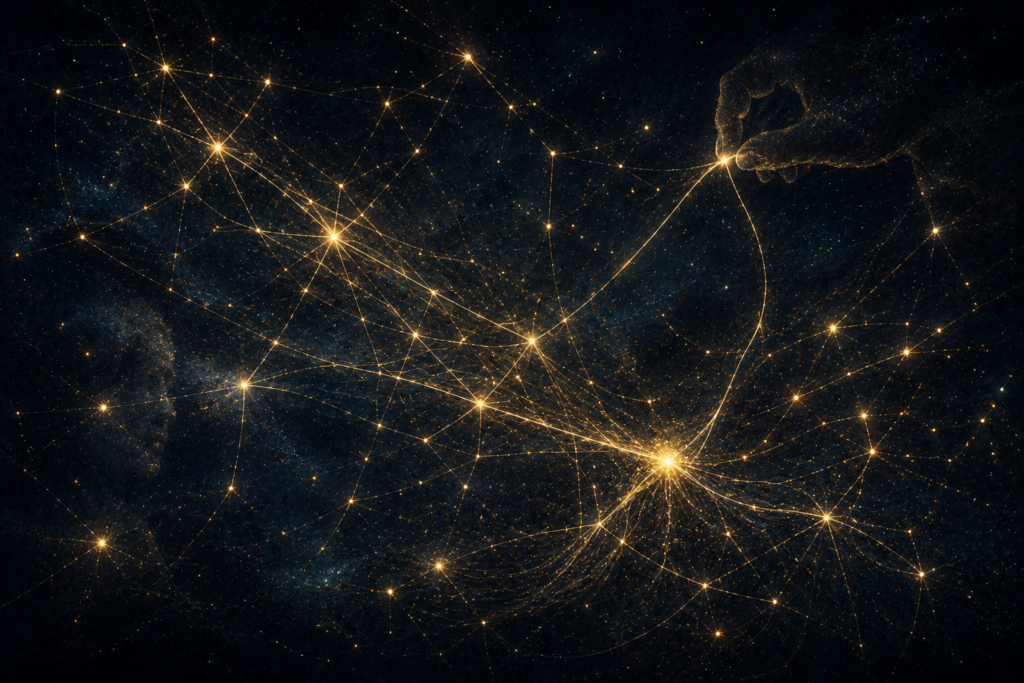
A natural question follows:
Could these correlations simply be the result of chance?
That possibility cannot be dismissed.
History contains thousands of significant events.
Any attempt to align planetary movements with historical developments risks highlighting successful examples while overlooking periods that do not fit the narrative.
This tendency, known in psychology as confirmation bias, is a legitimate concern in any historical or statistical investigation.
Accordingly, this article does not claim statistical proof.
Nor does it argue that Rahu’s transit predicts crises.
Instead, it presents a chronological observation across eight completed cycles and invites readers to evaluate whether the pattern appears stronger than coincidence alone might reasonably explain.
A more rigorous statistical study—comparing Rahu’s Dhanishta transits with all other Nakshatra transits over the same period—would be a valuable direction for future research.
Why This Investigation Matters
Whether one approaches this subject as an economist, historian, political scientist, or student of Vedic astrology, there is value in examining long-term historical cycles.
History often becomes clearer when viewed across generations rather than individual events.
Economic systems evolve.
Political institutions mature.
Civilisations adapt.
Recurring themes emerge.
The purpose of this investigation is not to replace established historical analysis, but to introduce an additional framework through which those developments may be observed.
Readers may ultimately conclude that the correlations presented here are meaningful.
Others may regard them as coincidental.
Both conclusions remain intellectually valid, provided they arise from careful examination rather than assumption.
The Emerging Pattern
Across eight completed Rahu transits through Dhanishta over approximately 150 years, several broad themes appear repeatedly:
- Periods of institutional transition.
- Significant financial restructuring.
- Monetary and banking reforms.
- Political realignments rather than constitutional collapse.
- Leadership tested during moments of change.
- Corrections following sustained expansion.
- Structural adaptation rather than immediate crisis.
These observations do not constitute proof of an astrological mechanism.
They do, however, present a historical pattern that is sufficiently consistent to justify continued scholarly interest.
A Word of Caution
Perhaps the greatest lesson from history is humility.
Neither economists, historians, nor astrologers consistently predict the future with precision.
Financial crises surprise experts.
Political movements overturn conventional wisdom.
Unexpected events alter the course of nations.
Planetary cycles, if they have interpretive value, should therefore be approached with the same intellectual discipline applied to any other historical framework—with curiosity, openness, and a willingness to revise conclusions as new evidence emerges.
That is the spirit in which this investigation has been written.
Coming in Part V
The Return of the Cycle (2026–2027): History, Possibilities, and the Road Ahead
In the final chapter, we turn our attention to the forthcoming Rahu transit through Dhanishta. Rather than attempting predictions, we ask a more measured question: If the historical patterns observed over the past 150 years continue to offer useful insights, what themes might students of Vedic Mundane Astrology reasonably watch during the 2026–2027 cycle?