
Exploring India’s Sacred Soul
A scholarly journey through India’s most sacred temples — history, mythology, scripture and living tradition.
- Saturn’s Audit… Rahu’s Disruption: India’s Political Sky (Aug – Dec 2026)
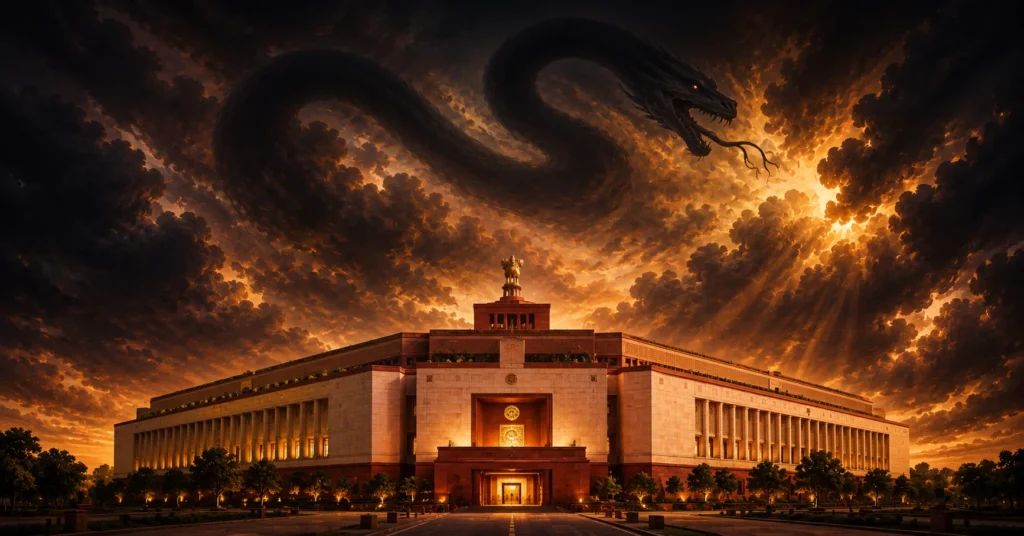 Is India Entering a Defining Political Phase? A Vedic Mundane Astrology Perspective. “History often tests institutions before it transforms them.” On 2 August 2026, Rahu enters Dhanishta (Avittam) Nakshatra, beginning a transit that will continue until April 2027. At almost the same time, Saturn remains retrograde in Pisces, creating a rare planetary backdrop that deserves attention—not as a deterministic prediction, but as an important period from the perspective of Vedic Mundane Astrology. The purpose of this article is not to predict specific events or claim that planetary movements cause political developments. Rather, it seeks to examine the symbolism of this… Read more: Saturn’s Audit… Rahu’s Disruption: India’s Political Sky (Aug – Dec 2026)
 - The Dhanishta Cycle – Part 5 – The Return of the Cycle
 History, Possibilities, and the Road Ahead (2026–2027) “History does not reveal the future. It reveals possibilities. Every generation faces its own unique circumstances, yet each also inherits the institutions, ambitions, and unresolved tensions of those that came before. If history moves in rhythms, then the value of studying those rhythms lies not in prediction, but in preparedness.” The Ninth Return On 2 August 2026, Rahu will once again enter Dhanishta (Avittam) Nakshatra, remaining there until 11 April 2027. This will be the ninth documented transit examined in this study since 1877. Unlike the previous eight cycles, this transit presents a… Read more: The Dhanishta Cycle – Part 5 – The Return of the Cycle
 - The Dhanishta Cycle – Part 4 – Looking for the Pattern
 Do Eight Cycles Reveal More Than Coincidence? “Patterns are powerful—but they can also be deceptive. The human mind is naturally inclined to connect events, identify rhythms, and search for meaning. A responsible investigation must therefore ask not only what appears to repeat, but also whether those repetitions withstand careful scrutiny.” From History to Interpretation The preceding chapters examined two parallel historical narratives. The first explored the evolution of the global financial system across eight Rahu transits through Dhanishta between 1877 and 2027. The second reviewed the four completed transits since India’s Independence and their association with significant political developments. Viewed… Read more: The Dhanishta Cycle – Part 4 – Looking for the Pattern
 - The Dhanishta Cycle – Part 3 – Governments Under Pressure
 Rahu in Dhanishta and Political Turning Points in India “Unlike financial markets, political systems do not collapse overnight. Institutions evolve gradually, governments lose or gain legitimacy over time, and electoral verdicts often reflect years of accumulated public sentiment. Yet history also contains moments when seemingly stable political structures undergo rapid transformation. It is these moments of transition that form the focus of this chapter.“ From Global Markets to Indian Democracy The previous chapter examined Rahu’s transit through Dhanishta alongside major developments in the global financial system. While the historical contexts differed across each cycle, a recurring theme emerged: periods of… Read more: The Dhanishta Cycle – Part 3 – Governments Under Pressure
 - The Dhanishta Cycle – Part 2 – When Markets Trembled
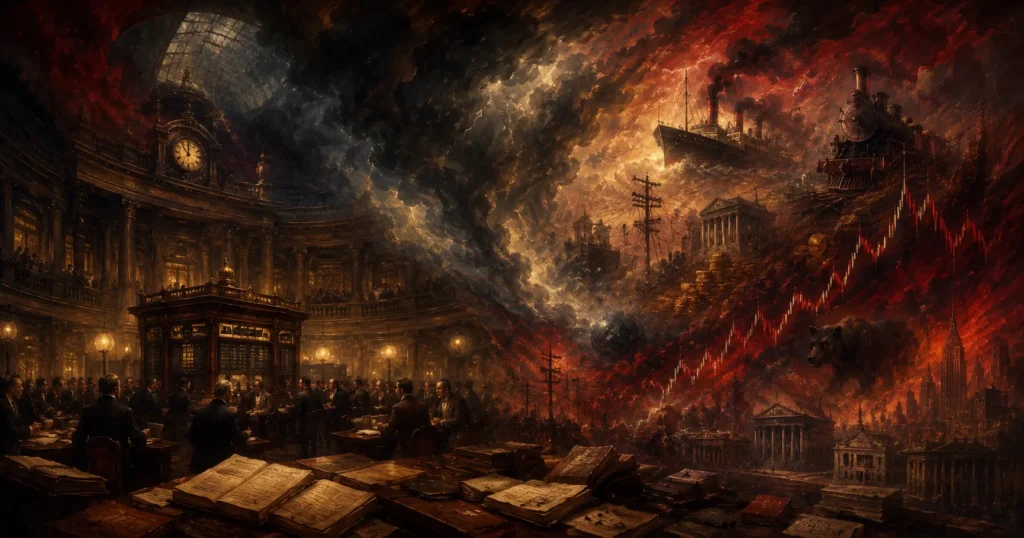 Rahu in Dhanishta and 150 Years of Global Financial History “Financial crises seldom arrive without warning. They emerge after years of excessive optimism, easy credit, speculation, policy mistakes, geopolitical shocks, or structural imbalances. Yet history also shows that these periods of instability often become turning points, reshaping economies and redefining financial systems for decades to come.” Looking Beyond Coincidence Economists have long studied recurring patterns in economic history. From the business cycles identified by Clément Juglar to Nikolai Kondratiev’s long-wave theory, researchers have observed that periods of expansion are often followed by contraction, correction, reform, and renewal. Credit booms frequently… Read more: The Dhanishta Cycle – Part 2 – When Markets Trembled
 - The Dhanishta Cycle – Part 1 – The Rhythm Before the Storm
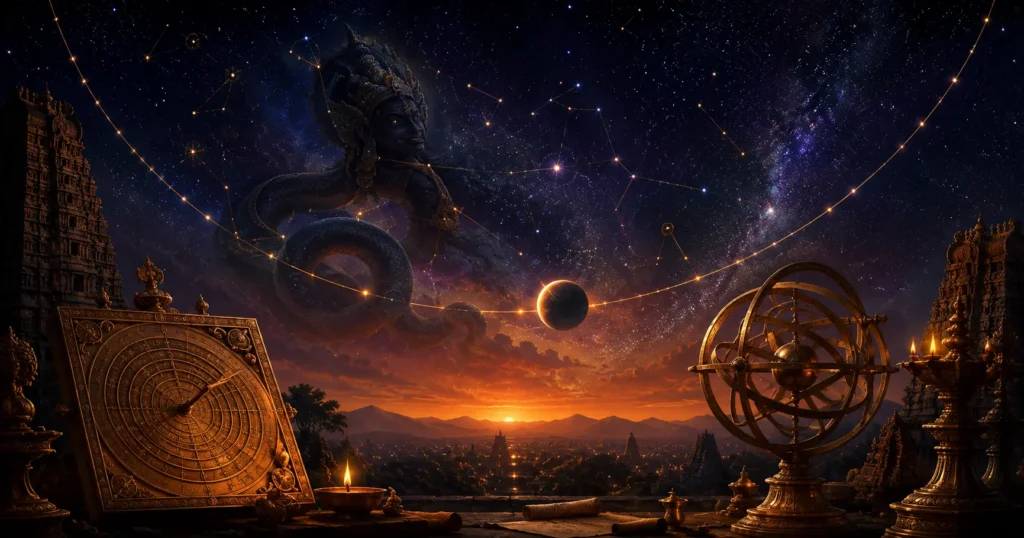 A 150-Year Historical Investigation into the Correlation Between Rahu’s Transit, Global Financial Crises, and Political Change in India “History rarely repeats itself in exactly the same way. Yet, time and again, it seems to move in recognizable rhythms. Economists describe these rhythms as business cycles. Historians call them turning points. Astrologers have, for thousands of years, described them as planetary cycles.” Every civilization has attempted to answer one enduring question: Does history move randomly, or does it follow recurring patterns? Economists have proposed business cycles, debt cycles, and market cycles. Political scientists have identified recurring phases of institutional growth and… Read more: The Dhanishta Cycle – Part 1 – The Rhythm Before the Storm